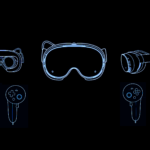
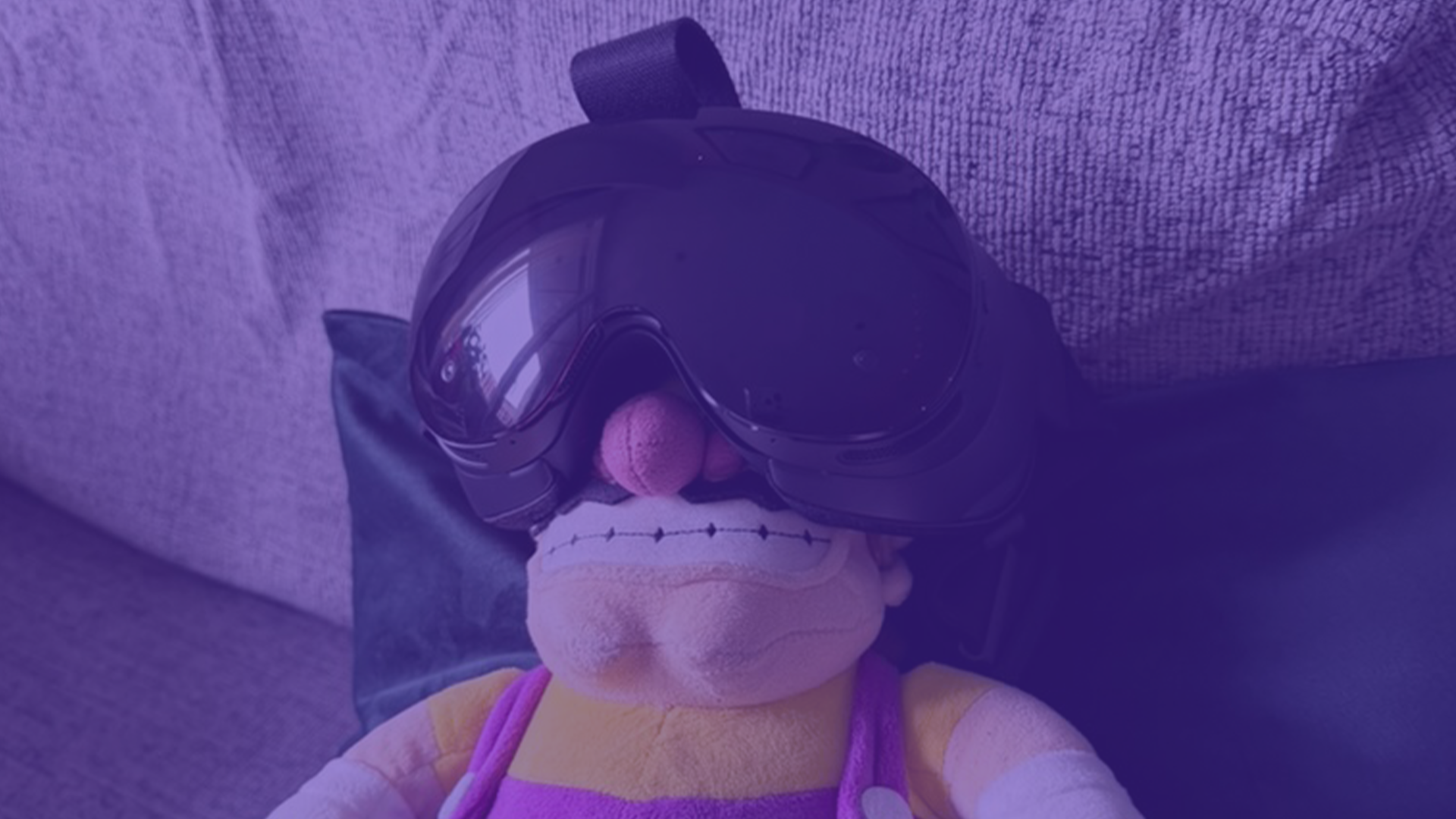

Valve provided Steam Frame Hub with the Steam Frame, Power Supply and Ergonomic Accessories Kit used for this coverage. Valve has no editorial control over our coverage.
Late last week, I was met with a surprising email: Valve wanted to send us a Steam Frame review unit. Once I’d picked my jaw up off the floor, I began asking the community for questions and things they’d like me to cover. I’ll be aiming to answer as many of those as I can over the coming weeks as I spend more time with the hardware.
When Monday morning rolled around, I was greeted with a package containing a 1TB Steam Frame retail unit, Power Supply and Ergonomic Accessories Kit… more on that last one later.
I’m also happy to confirm that the shipping packaging is discreet, with no obvious Steam Frame branding on the outside. Hopefully that helps avoid a repeat of the infamous stolen Steam Deck package fiasco of 2022.
After plugging the headset into a 45W USB-C charger, the Frame woke up with around 60% battery remaining and I began the setup process.
Sign in on Steam Frame
Memes and endless Reddit threads about the feature aside, I tried using the new ‘Sign in on Steam Frame’ option in the Steam mobile app to little avail.
No matter how many times I tried, I simply couldn’t get the feature to work. Eventually, I resorted to awkwardly holding my phone camera up to the headset lenses at an angle so I could scan the QR code being displayed inside. Not exactly the futuristic introduction to Valve’s new VR hardware I’d imagined.
With sign-in finally out of the way, the next step was a lengthy software update, which took approximately an hour to complete. It wasn’t the smoothest introduction to Frame, but once the update was finished, I could finally get into the part I’d been waiting for, throwing games at it.
Display and Lenses
Before getting into performance, it’s worth talking about the thing you’re going to spend the entire time looking through. My first impressions of Steam Frame’s displays and lenses are very positive. Text is clear and easy to read, something that becomes particularly important when you’re navigating Steam, using desktop applications or playing traditional games on a virtual display.
I’ve also had no difficulty finding or maintaining a clear image. The IPD adjustment is excellent and finding the sweet spot is incredibly easy. I’m not constantly nudging the headset around my face trying to regain clarity.
After jumping between games, menus and desktop applications throughout my first day, I’ve been really happy with the overall visibility and clarity. I’ll be spending more time specifically testing the displays, but after 24 hours there isn’t much for me to complain about here.
Initial VR Testing
One of the first things I wanted to find out was just how far I could push Steam Frame without immediately falling back to streaming from my desktop PC. The answer after 24 hours is: it varies wildly depending on the game and I immediately tried booting several VR titles standalone.
No Man’s Sky technically ran, but at roughly 6 FPS during my initial testing it was obviously nowhere near playable.
At the other end of the spectrum, Beat Saber was fully playable at 72Hz. VRChat was running at around 35 FPS using the default Lepton build.
I was unable to get Echoes of Mora VR running standalone at present. I’m hoping to return to that one for proper testing once the current compatibility issues are resolved.
There have been other casualties during my compatibility experiments too. sphereFACE currently refuses to boot, while Night in the Woods launches but wouldn’t detect controller input.
Flat-Screen Gaming Might Be Frame’s Best Trick
I’ve also spent quite a bit of time experimenting with traditional flat-screen games, and this has unexpectedly become one of my favourite parts of using Frame.
Dark Souls Remastered ran at 60 FPS during my initial testing, while Mewgenics was hitting 144 FPS and feels fantastic using the VR controller as a pointing device.
Balatro is fully playable, as is Dead Cells, while Danganronpa: Trigger Happy Havoc has been another surprisingly good fit for the headset, running at 60 FPS.
There’s something immediately appealing about having your existing Steam library available on a huge virtual display without every game needing to have been specifically designed for VR. The pointing functionality of the controllers also makes games that would normally expect a mouse surprisingly natural to interact with. It’s an area where I think Frame has considerably more testing ahead of it, but I’m already finding myself wanting to play games on Frame that I never expected to use a VR headset for.
The Comfort Factor
Perhaps the biggest surprise so far has been just how comfortable Steam Frame is over longer sessions.
With my Quest, around 90 minutes was generally the point where I’d start getting uncomfortable and eventually develop a headache from having the headset strapped to my face. I’ve now worn Frame for several hours at a time without experiencing the same problem. That’s a significant difference for me.
The stock head strap is already remarkably comfortable. Valve has managed to create something I can wear for extended periods without constantly thinking about the fact there’s a computer strapped to my head.
Of course, headset comfort is incredibly subjective. Head shape, face shape and how you wear the headset will all affect your experience, but for me personally, Valve has absolutely nailed this aspect of the hardware.
It also makes using Frame for traditional flat-screen games substantially more appealing. Playing something like Danganronpa or Mewgenics inside a headset isn’t particularly useful if I want to rip the thing off my head after an hour. So far, I don’t.
Addressing the Goopy Kit
Valve also sent over its Ergonomic Accessories Kit, so naturally I immediately started swapping things around.
Unfortunately, the controller straps aren’t for me. I have relatively small hands, and fitting the straps actually made reaching the face buttons more awkward. I experimented with both adjustments but couldn’t find a position that felt natural, so I’ve already returned to the stock controller grips. That’s obviously going to vary enormously depending on hand size, and someone with larger hands may have the exact opposite experience.
The additional head strap is much easier to recommend from my first day with it. It provides a welcome improvement in support, although it’s worth pointing out that I already find the stock head strap remarkably comfortable.
The larger light blocker included in the kit has also been a notable improvement for me over the stock configuration.
Controller Learning Curve
My relationship with the Steam Frame controllers has already improved considerably since taking them out of the box. My immediate reaction was that the button layout felt awkward, particularly with smaller hands. After several hours of switching between VR and traditional games, though, I’m increasingly getting used to where everything sits. I’m not ready to make a definitive judgement on them yet.
Controller ergonomics are one of those things where a first impression can change significantly once muscle memory develops. What felt slightly alien when I first picked them up already feels considerably more natural a day later so I’ll revisit this after substantially more playtime.
Praise the Dongle
One area I was particularly interested in testing was PC streaming using Valve’s included wireless dongle. So far, this might be one of the most impressive parts of Steam Frame.
My initial experience has been excellent. I’ve been able to stream from my Windows PC not only in the same room, but through the walls of my apartment, with little to no latency that I can actually notice during normal use. More importantly, I haven’t encountered any obvious compression artifacting during my initial testing.
When everything is working properly, it genuinely feels like the game is running locally on the headset. That’s a pretty remarkable first impression for wireless PC VR using a dongle.
That being said, take it with a huge pinch of salt.. wireless performance is highly dependent on your environment. My results in new build apartment with WiFi 6 available and other factors aren’t a guarantee of what somebody in a completely different networking environment will experience.
Based purely on my first 24 hours, Valve’s streaming solution has exceeded my expectations.
Camera Woes
Unfortunately, not everything has impressed me.
The passthrough cameras are probably my biggest hardware disappointment so far. Image quality feels closer to what I’d expect from the Quest 2 era than from a new headset in 2026. Most frustratingly, I can’t reliably read text in the real world through the cameras.
Looking at my phone or trying to read relatively small text generally means lifting the headset rather than simply relying on passthrough.
That’s disappointing, particularly because so much of the rest of Frame feels polished. Going from the clarity of the displays to the comparatively poor view of the real world is quite jarring. I understand Valve had to make sacrifices to keep the price affordable, but surely the camera is an area they should not have made cuts.
There is at least an interesting upgrade path on the way. We’ll shortly be receiving an Arcturus Vision camera for testing, and after experiencing the stock cameras I’m considerably more interested in seeing just how much of an improvement it can provide. We’ll be putting that through its own testing once it arrives.
Audio heaven
Audio has left a much better first impression. The integrated speakers aren’t particularly loud, but what is there sounds surprisingly premium.
There’s a good sense of space to the audio, and I’ve been impressed by the soundstage considering everything is coming from speakers integrated into the headset rather than a dedicated pair of headphones. Personally, I’d rather have this level of clarity and separation than speakers that simply prioritise being loud.
Like most aspects of the hardware, I want considerably more listening time before making any definitive judgement, but I haven’t felt an immediate need to reach for another audio solution.
Desktop Linux is Weird
Steam Frame’s desktop Linux environment is another area I’ve started experimenting with, although my first experience hasn’t been entirely smooth.
I’ve encountered a black screen on several occasions while attempting to enter desktop mode, forcing me to back out and try again.
At this stage, it feels more like an early software issue than anything fundamentally wrong with the feature, but it’s something I’ll be keeping an eye on as Valve continues updating the software. When you buy into new hardware this early, a certain amount of roughness around the edges isn’t particularly surprising. What matters now is how quickly those issues are addressed.
Yes, It Has the Smell
And now for the important hardware testing. If you’ve ever owned a Steam Deck, you’ll probably know exactly what I’m talking about. That strangely pleasant smell that comes out of the Deck’s exhaust vent became enough of a thing that Valve eventually had to tell people to stop deliberately huffing it.
I’m pleased to report that Steam Frame smells good too. There’s a very familiar warm, shiny hardware smell coming from the vents that immediately reminded me of unboxing my Steam Deck. You’ll want to run something that really gets the fan going to get the optimal huff.
Is sniffing your new £1,000+ VR headset an officially recommended part of the setup process? Almost certainly not.. But did I do it anyway? Obviously.
Sideloading with FrameDrop VR
I’ve also started testing CadeXR’s FrameDrop VR solution for sideloading APK applications onto Steam Frame. So far, I haven’t had any success getting Meta Quest APKs running, but some other Android applications have been a different story.
Most notably, I’ve managed to get Stremio and Nuvio running for video streaming. There’s clearly a lot more experimentation to be done here, but the possibility of running software outside the conventional Steam Frame ecosystem is already one of the more interesting rabbit holes I’ve encountered.
Battery Life TLDR: Bring a Charger
Battery life is probably the other obvious weakness I’ve encountered during my first day. During a mixture of downloading games, navigating menus and actually using the headset, I’ve generally been seeing around 90–100 minutes from a full charge, with some more demanding use bringing that figure down further.
Those aren’t controlled battery benchmarks yet, so don’t take 90–100 minutes as my final verdict on Steam Frame’s battery life.
Different refresh rates, workloads, brightness settings, wireless streaming and standalone games could all make a substantial difference, and I’ll be testing those variables individually. There is some good news on the other side of the equation that charging is quick.
Following the latest software update, I saw the battery gain approximately 50% in around 25 minutes during my initial testing.
That doesn’t make a small battery disappear, but being able to rapidly put a meaningful amount of charge back into the headset makes it considerably easier to live with.
The 24 Hour Verdict
After 24 hours, Steam Frame feels like a fascinating mixture of exceptionally polished hardware and software that’s still finding its feet. The fundamentals are strong.
The displays are clear, finding the sweet spot is effortless, the headset is remarkably comfortable and the audio is better than I expected. Perhaps most impressively, PC streaming through Valve’s wireless dongle has worked so well that, at times, I’ve forgotten the game wasn’t actually running on the headset.
But there are obvious weak points too. The passthrough cameras are disappointing. Battery life means you’ll probably become intimately acquainted with a USB-C cable. I’ve encountered bugs getting into desktop mode, and compatibility quickly becomes the Wild West once you venture beyond software that’s known to work.
Strangely, though, that last part is also one of the things I’ve enjoyed most. This headset is a tinkerers dream. I’ve tried games that run beautifully, games that run at 6fps and been surprised by games that run great but logically shouldn’t work at all.
And I want to keep trying more. That’s probably my biggest takeaway from the first 24 hours with Steam Frame. This isn’t our definitive Steam Frame review. It can’t be after a day, and I don’t want to pretend otherwise.
Over the coming weeks, Steam Frame Hub will be digging much deeper into PC streaming, standalone performance, accessories, desktop use, sideloading, emulation and compatibility across a much larger selection of both VR and traditional Steam games.
There are things I already think Valve needs to improve, and I’m particularly hoping software updates can smooth out some of the rough edges I’ve encountered.
But the important thing is that every time I’ve put Steam Frame down over the past 24 hours, I’ve wanted to pick it back up again. For a first day with a new piece of hardware, that’s about as good a sign as I could ask for.