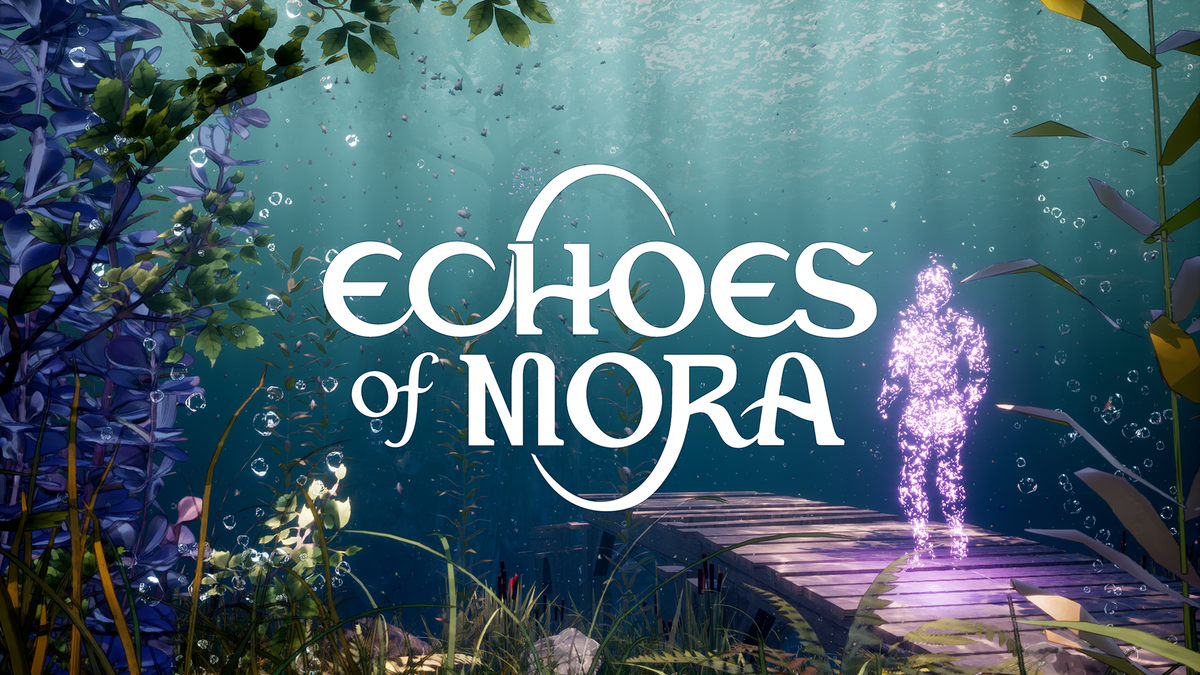

I love a narrative VR adventure, it’s a great avenue for immersing yourself into worlds untold. Echoes of Mora VR has a rather refreshing idea for an underwater adventure, a stark contrast to popular titles like Subnautica. There’s no oxygen meter ticking down in the corner of your vision, no monsters waiting to chase you through a flooded corridor, and no constant threat of drowning. Instead, developer Selkies Interactive wants you to slow down, explore, and unravel the mystery of a village lost beneath a strange purple lake.
It’s an approach that works surprisingly well in VR. Unfortunately, getting Echoes of Mora to actually run well in VR proved to be a considerably bigger challenge.
I spent time testing the game both directly on Steam Frame and through a high-end gaming PC equipped with an RTX 4080 Super and Ryzen 7 7800X3D. The results were disappointing.. Steam Frame standalone couldn’t run the game successfully at all with immediate crashes to dashboard, while even my desktop PC suffered from bothersome performance problems. That’s a real shame, because underneath those technical issues is an atmospheric little adventure that feels particularly well suited to VR.
Beneath the Lake
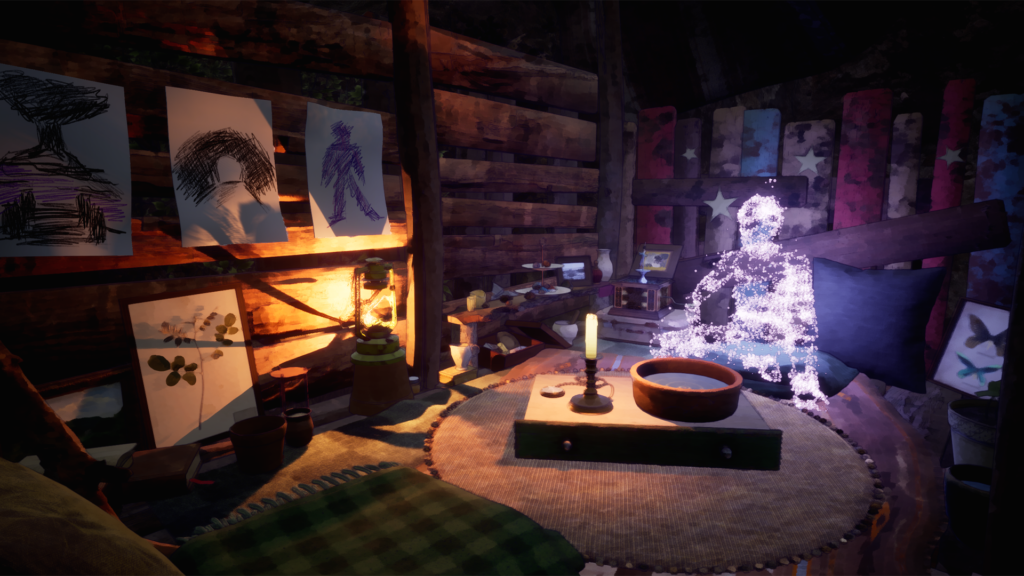
The premise is simple. Mora’s brother has disappeared near a mysterious, cursed lake, and what remains is a submerged village sitting beneath its purple-tinted waters. You explore those flooded streets and abandoned homes looking for clues about what happened, gradually reconstructing the events surrounding both her brother’s disappearance and the village itself.
Mora is the only person in the past capable of perceiving your presence. As you uncover information in the submerged present, you can communicate what you’ve discovered to her, answer questions and effectively investigate the mystery together from opposite sides of time. Your choices during these interactions can ultimately affect how the story concludes (I do love narrative branching).
The lack of survival mechanics or urgency gives the game a noticeably different vibe compared to others in this setting. Swimming through empty buildings and submerged streets could easily have been turned into horror, but instead there’s a strange calmness to it. The abandoned village feels melancholic rather than threatening, and the restrained sound design complements that nicely. VR should arguably be the perfect way to experience it, but it’s not.
Performance woes
And this is where my biggest problem with Echoes of Mora begins. I initially tried running the game standalone on Steam Frame. Unfortunately, I couldn’t get it working successfully at all. After contacting the team, they do not currently plan on bringing standalone support, which seems like a missed opportunity given its launch timing landing during the Steam Frame release window.
Given that Steam Frame is ultimately a linux PC running considerably more constrained hardware than a desktop gaming PC, I wasn’t enormously surprised it didn’t run. Standalone compatibility remains something of an experiment with plenty of SteamVR titles at the time of writing.
What I wasn’t expecting though was what happened when I moved over to my main PC. My system is equipped with an NVIDIA RTX 4080 Super and AMD Ryzen 7 7800X3D, hardware that should have absolutely no difficulty delivering a smooth experience in a relatively small VR title such as this. Yet Echoes of Mora still struggled.
Performance was inconsistent enough to become distracting in the headset, and I also encountered crashes during play. In conventional games, the occasional frame-rate drop is irritating. In VR, poor frame pacing and stuttering are considerably harder to ignore because the display is attached directly to your head and needs to respond smoothly to your movement.
When a game this visually modest struggles on hardware as powerful as a 4080 Super and 7800X3D, there’s clearly optimisation work still to be done. And that’s ultimately the biggest problem with reviewing the VR version right now. I like what Echoes of Mora is trying to do, but the technical experience repeatedly got in the way of enjoying it.
A great concept for VR
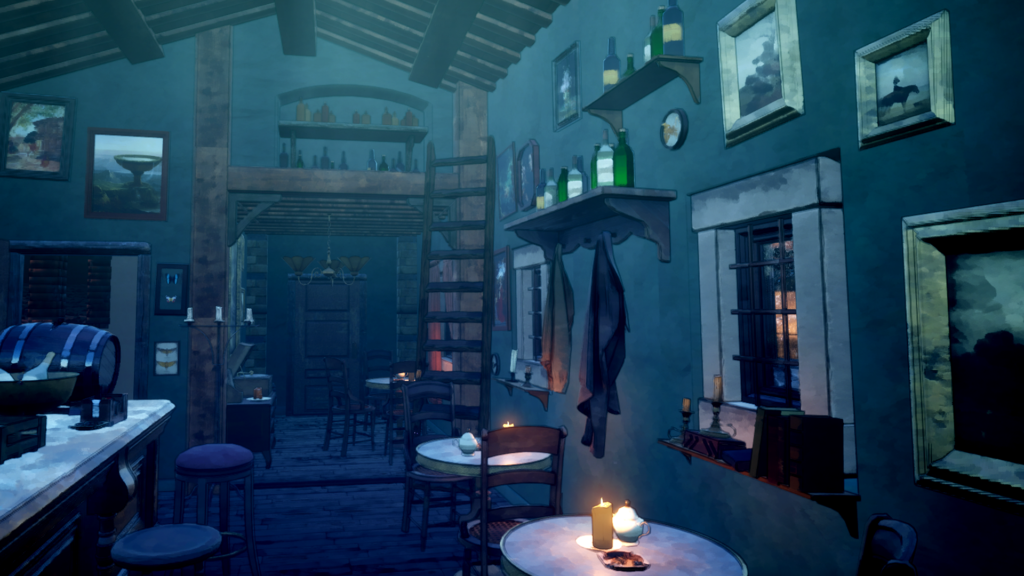
It’s particularly frustrating, the fundamentals translate nicely into VR but they really needed to give this a few months in the oven to optimise it.
Slow, environmental exploration is exactly the sort of experience that can benefit from putting on a headset. Looking around submerged rooms, searching through abandoned buildings and simply existing within this strange underwater space has considerably more presence in VR than it does on a monitor. The slower pace means you’re encouraged to actually look around rather than rush from objective marker to objective marker. There were moments where I found myself enjoying simply being inside the world Selkies Interactive has created. Then another bout of poor performance would remind me that the VR implementation isn’t where it needs to be.
An ambitious debut
It’s worth putting some of this into context, to give them some grace. Echoes of Mora is the debut release from Selkies Interactive, a studio formed in 2023 by game design students in Berlin. The project was developed through HTW Berlin’s game incubator programme with backing from Medienboard Berlin-Brandenburg.
It’s not trying to unnecessarily stretch its premise across ten or twenty hours. This is a short narrative experience that can comfortably be completed in an evening. Whether that length represents good value will naturally depend on what you’re looking for, but personally I’d rather see a small narrative game finish when its story is finished than pad itself out for the sake of a longer runtime.
Sadly, the performance issues made this a rough couple of hours to sit in a headset.
Verdict
Echoes of Mora‘s drowned village is atmospheric and it’s VR mode makes that world more tangible.. but right now it also exposes the game’s biggest weakness.
With Steam Frame standalone unable to run the game successfully in my testing and significant performance issues and crashes persisting even on an RTX 4080 Super and Ryzen 7 7800X3D PC, Echoes of Mora VR needs further optimisation before I could comfortably recommend diving in.
There’s a lovely little game sitting beneath the surface.
For now, unfortunately, the technical problems make the water considerably murkier than it needs to be.